Monday, April 22, 2013

World Book and Copyright Day: To Retrospect and to Look Forward


The World Book and Copyright Day is celebrated on April 23 each year. The first connection between books and April 23 was established by Spanish booksellers, who chose that day to commemorate Miguel de Cervantes. In 1995, UNESCO proclaimed April 23 as the World Book and Copyright Day.

Defining a book was not too difficult a few years back. There are different definitions used in different countries, but the UNESCO defines a book as a “bound, non-periodical publication, having 49 or more pages.” However, especially with the advent of e-books, this definition is in need of improvisation and discussions on the matter are currently ongoing.


Library Books, Pouya Sh at English Language Wikipedia.


The UNESCO recognizes several important functions of books. They are important as vectors of values and knowledge, depositories of the intangible heritage, windows onto the diversity of cultures and as tools for dialogue. Books are also important as sources of material wealth and copyright-protected works of creative artists.

Many countries do have a National Book Policy. The objective of having such a policy is to recognize it as a culturally and economically important industry and implementing steps to promote it. For example, it is possible to grant special concessions on bank loans, investments and postal services. Recognizing publishing as an industry will enable to increase the employment of experts in this field, which in turn, will help improve professionalism in the industry.

The publishing sector of Sri Lanka is currently at a critical condition. Behind all the attractive books which flood the market lingers this uncomfortable truth. New technology has made publishing a comparatively easy venture than a few decades ago. Therefore, the quantity of books published in Sri Lanka is larger than ever before. However, the quality of these publications has become the victim of the flood of books.

A quality book is the product of the input of many people. The writer is only one, albeit the most important contributor. But, the writer cannot be the publisher, the printer and the editor. All good books need the input of these services. For example, editing a book is a time consuming, serious exercise. However, since Sri Lanka is a comparatively small market, our publishers are finding it difficult to employ professional editors in sufficient numbers to cater for all the books that are published. Therefore, many books that are published have serious shortcomings, spelling and grammatical errors being only one of them.

Sri Lanka’s small market has also thrown many publishers into a rat race of publishing any piece of junk with a potential of earning some money which come across them. Furthermore, they find numerous ways to increase the sales for these books. There are many libraries scattered around the country in schools, local governmental bodies and other governmental and non-governmental institutions. These are a ready source of customers for these publishers. Once a book has been purchased by the library, it may or may not be read by the reader. But, that is none of the publisher’s concern.

One cannot always blame the publishers for these shortcomings. Many authors are also responsible for this situation. Their only aim is to earn some easy money through writing a book. Many of these writers do not have the required writing skills. They are opportunists. For example, there are many instances where the story of a famous film or a television series has been ‘retold’ in Sinhalese by one of our ‘writers.’

This brings us to the other crucial component of this UNESCO day, Copyright. However, it is doubtful if many of the writers have even a basic idea of this aspect. Copyright infringement and even outright plagiarism is not uncommon. This is something a professional editor can also look into. Lacking such services, a publishing company may release such a book without realizing the true nature of it. But the sad part to this story is that even such books have been recognized by various literary prizes on some occasions in the past.

By recognizing publishing as an industry and awarding them relevant concessions will help improve the quality of the book industry in Sri Lanka. With a proper national policy for improving and regulating the standards of our books, we can hope for a better future, where our writers are more recognized even internationally. Many “Third World” writers have reached international fame. There are Indian writers who are world famous. Some African writers are even more famous. But Sri Lanka, a country with a much better literacy level and a rich language and cultural heritage, is still lagging far behind. It is clear evidence for the need of a considerable overhaul of the book industry. It will be a worthy investment for a brighter future of Sri Lanka’s literary scene.

Sunday, March 31, 2013

PKK Rebels Offer a Ceasefire


Turkey may see lasting peace after almost three decades of fighting with the announcement of a ceasefire by the rebel group PKK. This, if successful, will end a three decade old armed conflict which has claimed at least fifty thousand lives.

Kurdish people inhabit an area straddling four countries in West Asia; Turkey, Iraq, Iran and Syria. There are small minorities in some other adjacent countries and some countries in Western Europe. The current world Kurdish population is said to be close to 38 million. In Turkey and Iraq, they are roughly one fifth of the population.

Kurdish separatist movements have been active in both Iraq and Turkey for a long time. The PKK, founded in 1970s, initiated an armed struggle against the Turkish government in 1984. Initially a Marxist outfit, it moved to a more moderate platform with the passage of time. The PKK insurgency was mainly rural based, active in South Eastern Turkey, where a Kurdish majority resides. In 1991, the PKK received an additional advantage when a Kurdish Autonomous Region was established in Iraq. Thereafter the PKK could use bases inside Iraq to launch attacks and fall back. On several occasions, the Turkish military forces have launched attacks at PKK rebels in Northern Iraq.

Several months after its leader Abdullah Ocalan was captured in Kenya in February 1999, the PKK announced a ceasefire. Ocalan was given the death sentence which was later commuted to life imprisonment. The ceasefire was broken in 2004 amid continuing clashes between the rebels and the government.

The current ceasefire was announced by the imprisoned leader Abdulla Ocalan and was read out by Kurdish Members of Parliament at a rally in Diyarbakir, South Eastern Turkey. The announcement came in time for the Kurdish New Year (Newroz). While the announcement of a ceasefire was widely anticipated, Ocalan’s call for a total withdrawal of PKK fighters from Turkey was a surprise to many. The acting leader of the PKK, Murat Karayilan, has expressed his agreement with Ocalan’s announcement. This shows a strong willingness of the PKK forces to abide by the ceasefire.

However, there still are questions raised about the announcement. There is no roadmap announced for the withdrawal of PKK forces. While some analysts speculate that the withdrawal will take place without any pre conditions, others disagree. The Turkish government has been cautious about the ceasefire declaration. Prime Minister Recep Tayyip Erdogan has stated that while the ceasefire decision is a positive development, the essential thing is to transform the decision into practice.

There are several factors which may help the ceasefire to be successful. Ocalan has been in negotiation with the government agents for a few years. He has been serious about a comprehensive peace process for a long time. The Erdogan government needs the support of the Kurdish parliamentarians to pass constitutional reforms. This opens the way for the Peace and Democracy Party (BDP), the main Kurdish party in Turkey, to be in a strong bargaining position. A 2/3 majority is needed for constitutional reforms and the ruling AK Party has only 327 out of 550 seats in parliament. The support of the 35 BDP members (elected as independents) will give the necessary majority.

Another major concern of the Turkish government is the possible spillover effects from the unstable situation in Syria. A sizeable Kurdish minority lives in Syria and Popular Resistance Groups (YPG), an armed group trained by PKK, has taken control of many towns inhabited by Kurds.

Neither the PKK nor the Turkish government can expect total victory in this conflict. Therefore, it is advantageous to both sides to reach a workable agreement to resolve the issue. While Ocalan’s declaration is a step forward, it will need a great deal of negotiations and bargaining. Hopefully this new ceasefire would bring lasting peace to the Kurdish regions in Turkey.

Saturday, December 29, 2012

Emperors of Japan: A Divine Lineage


This was written on December 20, 2012, to commemorate Emperor Akihito's 79th birthday, which was celebrated on December 23, 2012. Since Akihito is the 125th Emperor of the traditional line of Japanese Emperors, I thought of publishing it here as the 125th blog post of this blog.


King Farouk I of Egypt reportedly said after his abdication in 1952, that “The whole world is in revolt. Soon there will be only five kings left-the King of England, the King of Spades, the King of Clubs, the King of Hearts and the King of Diamonds.” If he had indeed said these words, this shows his inadequate knowledge in history and politics. The first kings of England appeared in the 10th Century in Wessex and the monarchy of England has not been continuous. Playing cards was started in China in the 9th Century. However, in another country, the same imperial family had been in power for reportedly more than 2600 years when Farouk I supposedly uttered those words.

The current monarch of that dynasty, His Imperial Majesty Emperor Akihito of Japan, celebrates his 79th birthday on December 23, 2012. Born in 1933 to Emperor Hirohito (Showa Emperor) and Empress Kojun, he was the first son and the fifth child of the royal couple. Therefore, he became the crown prince when he was born. He experienced the Second World War as a small boy and was evacuated from Tokyo in the height of the American bombing of the city. The fact that he was not an adult may have had a role in Emperor Hirohito’s decision of not abdicating after the end of the war.

After the war, Akihito was tutored on English and Western manners by Elizabeth Gray Vining, who had a lasting impact on the young prince. In 1952, his formal investiture as the Crown Prince was held in Tokyo. Crown Prince Akihito married Michiko Shoda, the daughter of a wealthy businessman, in 1959. She was the first commoner to be married into the royal family in its entire history.

Emperor Hirohito and Empress Kojun (seated) with Crown Prince Akihito and Crown Princess Michiko (standing). (The wedding of the Crown Prince and Crown Princess in 1959)


Legend has it that the imperial line is 2672 years old, easily making it the oldest continuous hereditary monarchy in the world. Akihito is the 125th Emperor in this line. It is true that there are no written records to prove the existence of the earlier Emperors. The first non legendary Emperor appears in the 6th Century A.D. Therefore, even if only the non-legendary period is considered, the imperial line has a recorded history of more than 1500 years.

According to legend, Emperor Jimmu, the first to ascend to the throne in 660 B.C., is a direct descendant of the Sun Goddess Ameterasu. This divinity has been one reason for the longevity of the imperial family in power. Although Emperor Hirohito ‘renounced divinity’ the fact remains that the Imperial family of Japan is well above the other families of Japan. The writer and imperial authority Shichehei Yamamoto once wrote that “According to Japanese law, all citizens are required to have their names and abodes officially registered with the authorities. However, the Emperor and the members of the Imperial Family lack both a family name and a family register. For that reason, when Empress Michiko married the then Crown Prince [Akihito], her name was crossed off from her family register.” Therefore, even though the Imperial Household Law is subject to the Constitution of Japan, in practice it seems that it is not the case.

Another reason for the longevity of the Imperial Family is their lack of real political power. The Japanese Emperors, while revered by the people, have had little power throughout the history. For Centuries, until 1868, the country was effectively ruled by military leaders known as shoguns. Emperors were enthroned or abdicated according to the whims of the Shogun. However, as the Imperial Family was divine, the shoguns could not afford to chose an Emperor from another family.

The last of the Shogunates was the Tokugawa Shogunate, which was overthrown in 1868 by the Meiji Restoration. This supposedly saw the power returning to the Emperor. But, as a matter of fact, the Meiji Emperor was used by the families which overthrew the Shogunate to legitimize their rule. Under the Meiji Constitution of 1890, the Emperor was to take advice of the Prime Minister on all political matters. After the end of the Second World War, the powers of the Emperor were curtailed even more.

Although the Emperor does not have any political power many Japanese revere him. The lack of political power itself may have helped for the Emperors to preserve that reverence. They have not mingled with the common people except for in dire or critical situations. The Meiji Emperor travelled around the country in 1868 to strengthen the new regime. Emperor Hirohito travelled around the country after the Second World War. Emperor Akihito, while at times trying to bring the Imperial Family closer to common people, has also kept his distance. His televised speech after the Tohoku earthquake and tsunami in 2011 was the first ever prepared televised speech by the Emperor, which also showed the magnitude of the disaster. In this speech, he urged his people not to give up hope. Emperor Akihito and Empress Michiko later visited people who were in a temporary shelter.

Emperor Akihito has expressed his regrets about the Second World War, travelling to Saipan in 1995 and various War Memorials around Japan. Around four years ago, before the 20th anniversary of his enthronement, the Emperor expressed concern over the fact that the Japanese were forgetting the War. He reportedly said that, “What I am rather more concerned about is that history might gradually be forgotten. The 60-plus years of the Showa Era taught us many lessons. I believe it is essential for us to learn from the historical facts and prepare ourselves for the future.”

Japan is currently entangled in maritime border disputes with several countries and has just elected one of the most nationalist legislatures in its recent history. Whether the Japanese people share the concerns of their Emperor is a question only time can answer.

Sunday, December 16, 2012

Japan Votes in a Confused Election


Around two fifth, if not more, of the Japanese electorate, is either unwilling to vote or are undecided as to whom they should vote for in the country’s election. These include a large fraction of its younger population. Japanese society is ageing rapidly and politics has been largely an old people’s affair in most of its modern history.

The current election has become a confusing affair because of more than a dozen political parties involved. They have come to the forefront because both the Liberal Democratic Party (LDP) and the Democratic Party (DP) have lost their popularity. The Japanese people, disappointed with the LDP, handed over the power to the DP three years ago, to be disappointed even more. However, many people are not prepared to call back the LDP to govern them.

National Diet Building of Japan (2009), Wiii, Wikimedia Commons


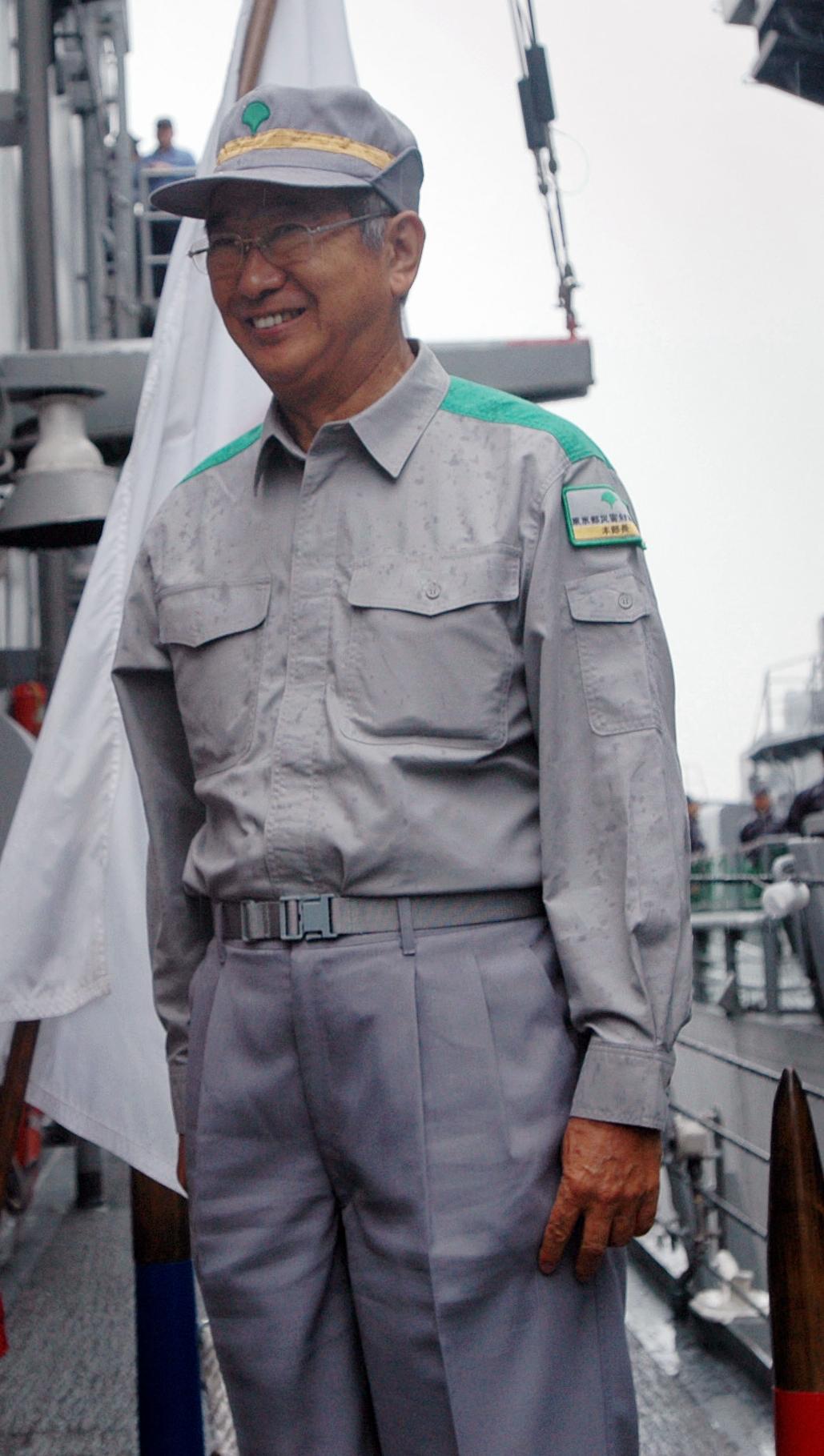
Some of the new parties are just weeks old in name but not old when it comes to the people involved. The Japan Restoration Party (JRP) is a new party only because it is the result of the merger of two other parties. The eighty year old popular former governor of Tokyo, Shintaro Ishihara, left his job to assume the leadership of a reformed “Sunrise Party.” He promptly merged it with Osaka mayor Toru Hashimoto’s Japan Restoration Party. The resultant alliance retained the name JRP and is led by Ishihara, a vocal nationalist. Meanwhile, a large splinter group of the Democratic Party parliamentary group has joined hands with the popular governor of Shiga Prefecture, Yukiko Kada, to form “Tomorrow Party.” While the latter has not shown much promise, the JRP is set to become one of the bigger parties in the new lower house in the Japanese Diet.

Despite its low popularity, the LDP is poised to become the largest party in the newly elected lower house of the Diet. The Japanese Diet, or the National Kokkai, is a bicameral legislature. The lower house, or the House of Representatives, has 480 members, out of which 300 are elected in single member constituencies and the others are elected in a proportional representative system across eleven block districts. Despite the decline in popularity, the LDP is the single most popular party in Japan today. Therefore, it will most probably win the majority of the 300 single member constituencies in the election and will also win a substantial portion of other 180. Even if it fails to win a majority, the LDP could form a coalition government with the support of moderate right wing parties such as the New Komeito Party.

The main issues of concern to the voters in this election are the economy, the future of nuclear power and the prevailing regional political environment, dominated by the ongoing maritime border dispute with China. The Japanese voters are at a loss when they try to figure out which party stands where about certain-especially economic-issues.

The Japanese are in a dilemma when it comes to nuclear energy. They do not want to live with it, but cannot go without it. Despite the fact that the support for nuclear power nosedived after the Fukushima disaster, the zero nuclear parties, who want to see Japan phasing out nuclear energy completely, enjoy little support. The main reason is that these parties, spearheaded by the Tomorrow Party and the Japanese Communist Party (JCP) have not been able to propose viable alternatives to nuclear power.

The quest for energy sources is the primary motivation in pursuing an aggressive stance over the maritime boundary issue. This has rejuvenated the nationalists in Japan, such as Shintaro Ishihara, who is so anti-Chinese that he denies the occurrence of the Nanjing massacre. The 75th anniversary of the event was commemorated by China just three days before the Japanese go to polls and the Chinese people consider the event as a ‘forgotten holocaust.’

However, the average Japanese is reluctant to jump into the bandwagon of extreme nationalism of the types of Ishihara. Their alternative is the leader of the LDP, Shinzo Abe, who has also taken up a hawkish attitude over the issue. Nevertheless, Ishihara remains a relatively popular figure. A survey carried out by Yomiuri Shimbun between 23rd and 25th of November indicated that twenty percent of the respondents preferred him as Japan’s next Prime Minister, although the JRP as a party is not that popular. It is true that the Yomiuri Shimbun is a conservative newspaper and has predicted a much higher percentage of votes for the JRP than the surveys by other organizations. But Ishihara's ideas have struck a cord with a certain section of the electorate and it might play a part in helping the LDP to regain power.

Saturday, November 24, 2012

Right Wing Parties to Make Inroads in Japanese Election


Politics makes strange bedfellows. For example, consider Tokyo's popular former governor Shintaro Ishihara and Toru Hashimoto, mayor of Osaka. The former merged his Sunrise Party with the Japan Restoration Party (JRP) of the latter, despite serious policy differences between the two, such as on the future of nuclear energy in Japan. After the merger, the elderly Ishihara was appointed the president of the party which was led until then by Hashimoto. The JRP, the only national party in Japan which is based outside Tokyo is hoping to be a serious contender in the December 16 election for the House of Representatives in the Japanese Diet.

Shintaro Ishihara in 2006, U.S. Navy photo by Mass Communication Specialist Seaman Adam York, Wikimedia Commons

Third parties such as the JRP have been able to exploit the vacuum created by the unpopularity of both the leading parties, the Democratic Party of Japan (DPJ) led by Prime Minister Yoshihiko Noda and the Liberal Democratic Party (LDP) led by former Prime Minister Shinzo Abe. Despite being unsatisfied with the three year rule of the DPJ, the majority of the electorate do not wish to see a return of the LDP. The LDP ruled Japan almost continuously from the 1950s, except for a brief period in 1993-1994 when they lost power, until it was decisively defeated by the DPJ.

Opinion polls suggest that the the DJP and LDP unable to muster even half of the votes between them and more than one third of the voters are still undecided on whom to vote. Therefore, the third parties have a lot to gain from the elections. Many of the small parties are on the political right, seeking the revitalization of Japan. However, except this declared ambition, there is little consensus between them. This has created apprehension over the stability of the government which will be formed after the elections.

However, with the left wing parties largely marginalized, the lower House of the Diet which will be elected will pull Japan's politics to the right. The increased role of the nationalists such as Ishihara, who has a vehemently anti-China policy, will not be conducive towards diffusing regional tensions.

Sunday, November 11, 2012

Osama bin Laden still a Factor in U.S. Elections


Almost exactly eight years ago, America went to polls to elect a president. What was expected to be a tight race, ended in a relatively comfortable victory to the incumbent George W. Bush. America’s most wanted man and the leader of Al-Qaeda, Osama bin Laden, had an impact on the election through a video tape that was released days before. Apprehensive of their security, some voters swayed to the Bush camp, giving him an advantage in the eleventh hour.

Osama bin Mohammed bin Awad bin Laden, Wikimedia Commons

It is eighteen months since the demise of Osama bin Laden. His once feared Al-Qaeda has suffered defeat after defeat. However, the once feared bin Laden is still a man who still has an influence over American politics. If it was not the case, the National Geographic Channel would not have premiered “Seal Team Six: The Raid on Osama bin Laden” just two days before America chose a new president.

Directed by John Stockwell, the movie has been produced by Weinstein Company of Harvey Weinstein and Voltage Pictures. As one of the writers and executive producers of the movie, Weinstein plays a key part in the movie. As National Geographic Channel (NGC) President Howard Owens stated “[T]he success of this premiere would not have been possible without Harvey's driving force and support for this film and our network.” The fact that Weinstein was an ardent supporter and a key fundraiser of president Obama’s reelection campaign was a reason for the Republicans to complain. Adding salt to their injury, the film used several archive footages of Obama himself.

However, the NGC, which premiered the film, is primarily owned by one of the most conservative media tycoons, Rupert Murdoch. The concern for the Channel was to attract the maximum possible number of viewers, which the film achieved, despite millions of homes still not having electricity in the aftermath of Hurricane Sandy. With 2.7 million people watching the show, it was by far the best rated NGC show in 2012 and the sixth highest rated show in the entire 15 year history of the channel. David Lyle, CEO of the channel was very pleased. “We are overwhelmed that the viewers across the country responded en masse to this socially relevant, factually based and entertaining film.” It is clear that if the film was featured after the election, it would not have generated this magnitude of interest.

While some critics have praised the film, others have strongly criticized it. Writing to the New York Times, Alessandra Stanley argued that “[A]s a movie it’s not nearly as gripping as it could be, given how harrowing and suspenseful the actual events were on the night of May 2, 2011.”

However, the film has been made to impress the viewers, generating a sense of pride in the American public. It could not have come at a better moment when the Eastern United States is still dealing with the aftermath of Hurricane Sandy.

In the movie, the culmination of “Operation Neptune Spear”, the death of bin Laden, is followed by total silence, after which the time 1.20 a.m. is shown on the screen, which made me recall the popular TV series 24. Thereafter, the voice of the Commanding Officer of the operation is heard as he informs the White House and the Intelligence team involved in the operation that, “[F]or God and Country, Geronimo is KIA.” The film aptly ended with the other most famous phrase to come out of “Operation Neptune Spear.” President Barak Obama declares that “justice has been done.”

Following the operation, Obama also claimed that bin Laden raid is the “most important single day of my presidency.” Just before the election, opinion polls showed that the majority of the possible voters believed that Obama will be a better Supreme Commander than Romney. While economy was a key concern, security concerns may have also played a part in the reelection of Obama. Even in his death, Osama bin Laden has played his part in American politics through “Seal Team Six: The Raid on Osama bin Laden.”

Thursday, November 1, 2012

Why do we do Quizzing?


This article appeared in the souvenir of the 22nd "Blue and Gold Quiz" held by the General Knowledge Club of Royal College on October 30, 2012.


I was honoured when I was asked to contribute to the souvenir of the Blue and Gold Quiz in 2012. Since the Blue and Gold is all about quizzing, I decided to write on this topic when it was suggested. Why do people do quizzing? Why do we do quizzing?

Photo: Souvenir of "Blue and Gold Quiz 2012" by Ramesh Lakruwan.

Quizzing is a game which tests your knowledge in various areas. It’s simply a matter of answering questions thrown at you. Obviously, the more you answer, the more you will score. I have been asked many questions at various quizzes. Yet, when I was asked why I take part in quizzes, I was searching for an answer. With a fair bit of brainstorming, I came up with some answers. However, this may not be a complete list.

Anyone with a fair bit of intelligence can take part in quizzes. But, not all intelligent people are good quizzers and all quizzers are not having a born talent for it. Also, even though practically any sane person can participate in quizzes, it is hard to find a really good quizzer. The main reason is that to be a successful quizzer you have to have a passion for it.

What factors kindle the passion for quizzing? There can be several. Sir Francis Bacon stated one such factor, although not in the same context, in 1597, when he said “knowledge is power.” A knowledgeable person has self confidence and is ready to face the challenges of life. It may help them in their careers and even personal lives. On a personal note, the fact that I have some general knowledge has helped me in numerous competitive exams. General knowledge has become a part of our life.

Obviously, the competitiveness drives a quizzer to take up the challenge. It is also about social interaction. How good it is to interact with different people from different walks of life and yet have a common passion for quizzing? To compete with them and win will be an aspiration which drives on any serious quizzer. The excitement one feels after winning an open quiz or a school level quiz is matched only by a similar success. A success at an open quiz will have some financial benefits. But the recognition, fame and all other perks resulting from a victory will drive any quizzer towards that goal.

However, the most important factor which drives on many quizzers including me is the fun of it. Of course, it is hard work. But, interacting with colleagues, studying, inquiring, discussing, challenging each other, celebrating success, recalling the blunders we made over the years, contemplating the future strategy after a failure are all part of quizzing and part of the fun. Winning is fun. That excitement is worth all the hardship that goes to quizzing. But, even if he or she does not succeed, a passionate quizzer will never lament. At the end of the day, the knowledge we acquire and the fun we have are worth a fortune.