Saturday, December 29, 2012

Emperors of Japan: A Divine Lineage


This was written on December 20, 2012, to commemorate Emperor Akihito's 79th birthday, which was celebrated on December 23, 2012. Since Akihito is the 125th Emperor of the traditional line of Japanese Emperors, I thought of publishing it here as the 125th blog post of this blog.


King Farouk I of Egypt reportedly said after his abdication in 1952, that “The whole world is in revolt. Soon there will be only five kings left-the King of England, the King of Spades, the King of Clubs, the King of Hearts and the King of Diamonds.” If he had indeed said these words, this shows his inadequate knowledge in history and politics. The first kings of England appeared in the 10th Century in Wessex and the monarchy of England has not been continuous. Playing cards was started in China in the 9th Century. However, in another country, the same imperial family had been in power for reportedly more than 2600 years when Farouk I supposedly uttered those words.

The current monarch of that dynasty, His Imperial Majesty Emperor Akihito of Japan, celebrates his 79th birthday on December 23, 2012. Born in 1933 to Emperor Hirohito (Showa Emperor) and Empress Kojun, he was the first son and the fifth child of the royal couple. Therefore, he became the crown prince when he was born. He experienced the Second World War as a small boy and was evacuated from Tokyo in the height of the American bombing of the city. The fact that he was not an adult may have had a role in Emperor Hirohito’s decision of not abdicating after the end of the war.

After the war, Akihito was tutored on English and Western manners by Elizabeth Gray Vining, who had a lasting impact on the young prince. In 1952, his formal investiture as the Crown Prince was held in Tokyo. Crown Prince Akihito married Michiko Shoda, the daughter of a wealthy businessman, in 1959. She was the first commoner to be married into the royal family in its entire history.

Emperor Hirohito and Empress Kojun (seated) with Crown Prince Akihito and Crown Princess Michiko (standing). (The wedding of the Crown Prince and Crown Princess in 1959)


Legend has it that the imperial line is 2672 years old, easily making it the oldest continuous hereditary monarchy in the world. Akihito is the 125th Emperor in this line. It is true that there are no written records to prove the existence of the earlier Emperors. The first non legendary Emperor appears in the 6th Century A.D. Therefore, even if only the non-legendary period is considered, the imperial line has a recorded history of more than 1500 years.

According to legend, Emperor Jimmu, the first to ascend to the throne in 660 B.C., is a direct descendant of the Sun Goddess Ameterasu. This divinity has been one reason for the longevity of the imperial family in power. Although Emperor Hirohito ‘renounced divinity’ the fact remains that the Imperial family of Japan is well above the other families of Japan. The writer and imperial authority Shichehei Yamamoto once wrote that “According to Japanese law, all citizens are required to have their names and abodes officially registered with the authorities. However, the Emperor and the members of the Imperial Family lack both a family name and a family register. For that reason, when Empress Michiko married the then Crown Prince [Akihito], her name was crossed off from her family register.” Therefore, even though the Imperial Household Law is subject to the Constitution of Japan, in practice it seems that it is not the case.

Another reason for the longevity of the Imperial Family is their lack of real political power. The Japanese Emperors, while revered by the people, have had little power throughout the history. For Centuries, until 1868, the country was effectively ruled by military leaders known as shoguns. Emperors were enthroned or abdicated according to the whims of the Shogun. However, as the Imperial Family was divine, the shoguns could not afford to chose an Emperor from another family.

The last of the Shogunates was the Tokugawa Shogunate, which was overthrown in 1868 by the Meiji Restoration. This supposedly saw the power returning to the Emperor. But, as a matter of fact, the Meiji Emperor was used by the families which overthrew the Shogunate to legitimize their rule. Under the Meiji Constitution of 1890, the Emperor was to take advice of the Prime Minister on all political matters. After the end of the Second World War, the powers of the Emperor were curtailed even more.

Although the Emperor does not have any political power many Japanese revere him. The lack of political power itself may have helped for the Emperors to preserve that reverence. They have not mingled with the common people except for in dire or critical situations. The Meiji Emperor travelled around the country in 1868 to strengthen the new regime. Emperor Hirohito travelled around the country after the Second World War. Emperor Akihito, while at times trying to bring the Imperial Family closer to common people, has also kept his distance. His televised speech after the Tohoku earthquake and tsunami in 2011 was the first ever prepared televised speech by the Emperor, which also showed the magnitude of the disaster. In this speech, he urged his people not to give up hope. Emperor Akihito and Empress Michiko later visited people who were in a temporary shelter.

Emperor Akihito has expressed his regrets about the Second World War, travelling to Saipan in 1995 and various War Memorials around Japan. Around four years ago, before the 20th anniversary of his enthronement, the Emperor expressed concern over the fact that the Japanese were forgetting the War. He reportedly said that, “What I am rather more concerned about is that history might gradually be forgotten. The 60-plus years of the Showa Era taught us many lessons. I believe it is essential for us to learn from the historical facts and prepare ourselves for the future.”

Japan is currently entangled in maritime border disputes with several countries and has just elected one of the most nationalist legislatures in its recent history. Whether the Japanese people share the concerns of their Emperor is a question only time can answer.

Sunday, December 16, 2012

Japan Votes in a Confused Election


Around two fifth, if not more, of the Japanese electorate, is either unwilling to vote or are undecided as to whom they should vote for in the country’s election. These include a large fraction of its younger population. Japanese society is ageing rapidly and politics has been largely an old people’s affair in most of its modern history.

The current election has become a confusing affair because of more than a dozen political parties involved. They have come to the forefront because both the Liberal Democratic Party (LDP) and the Democratic Party (DP) have lost their popularity. The Japanese people, disappointed with the LDP, handed over the power to the DP three years ago, to be disappointed even more. However, many people are not prepared to call back the LDP to govern them.

National Diet Building of Japan (2009), Wiii, Wikimedia Commons


Some of the new parties are just weeks old in name but not old when it comes to the people involved. The Japan Restoration Party (JRP) is a new party only because it is the result of the merger of two other parties. The eighty year old popular former governor of Tokyo, Shintaro Ishihara, left his job to assume the leadership of a reformed “Sunrise Party.” He promptly merged it with Osaka mayor Toru Hashimoto’s Japan Restoration Party. The resultant alliance retained the name JRP and is led by Ishihara, a vocal nationalist. Meanwhile, a large splinter group of the Democratic Party parliamentary group has joined hands with the popular governor of Shiga Prefecture, Yukiko Kada, to form “Tomorrow Party.” While the latter has not shown much promise, the JRP is set to become one of the bigger parties in the new lower house in the Japanese Diet.

Despite its low popularity, the LDP is poised to become the largest party in the newly elected lower house of the Diet. The Japanese Diet, or the National Kokkai, is a bicameral legislature. The lower house, or the House of Representatives, has 480 members, out of which 300 are elected in single member constituencies and the others are elected in a proportional representative system across eleven block districts. Despite the decline in popularity, the LDP is the single most popular party in Japan today. Therefore, it will most probably win the majority of the 300 single member constituencies in the election and will also win a substantial portion of other 180. Even if it fails to win a majority, the LDP could form a coalition government with the support of moderate right wing parties such as the New Komeito Party.

The main issues of concern to the voters in this election are the economy, the future of nuclear power and the prevailing regional political environment, dominated by the ongoing maritime border dispute with China. The Japanese voters are at a loss when they try to figure out which party stands where about certain-especially economic-issues.

The Japanese are in a dilemma when it comes to nuclear energy. They do not want to live with it, but cannot go without it. Despite the fact that the support for nuclear power nosedived after the Fukushima disaster, the zero nuclear parties, who want to see Japan phasing out nuclear energy completely, enjoy little support. The main reason is that these parties, spearheaded by the Tomorrow Party and the Japanese Communist Party (JCP) have not been able to propose viable alternatives to nuclear power.

The quest for energy sources is the primary motivation in pursuing an aggressive stance over the maritime boundary issue. This has rejuvenated the nationalists in Japan, such as Shintaro Ishihara, who is so anti-Chinese that he denies the occurrence of the Nanjing massacre. The 75th anniversary of the event was commemorated by China just three days before the Japanese go to polls and the Chinese people consider the event as a ‘forgotten holocaust.’

However, the average Japanese is reluctant to jump into the bandwagon of extreme nationalism of the types of Ishihara. Their alternative is the leader of the LDP, Shinzo Abe, who has also taken up a hawkish attitude over the issue. Nevertheless, Ishihara remains a relatively popular figure. A survey carried out by Yomiuri Shimbun between 23rd and 25th of November indicated that twenty percent of the respondents preferred him as Japan’s next Prime Minister, although the JRP as a party is not that popular. It is true that the Yomiuri Shimbun is a conservative newspaper and has predicted a much higher percentage of votes for the JRP than the surveys by other organizations. But Ishihara's ideas have struck a cord with a certain section of the electorate and it might play a part in helping the LDP to regain power.

Saturday, November 24, 2012

Right Wing Parties to Make Inroads in Japanese Election


Politics makes strange bedfellows. For example, consider Tokyo's popular former governor Shintaro Ishihara and Toru Hashimoto, mayor of Osaka. The former merged his Sunrise Party with the Japan Restoration Party (JRP) of the latter, despite serious policy differences between the two, such as on the future of nuclear energy in Japan. After the merger, the elderly Ishihara was appointed the president of the party which was led until then by Hashimoto. The JRP, the only national party in Japan which is based outside Tokyo is hoping to be a serious contender in the December 16 election for the House of Representatives in the Japanese Diet.

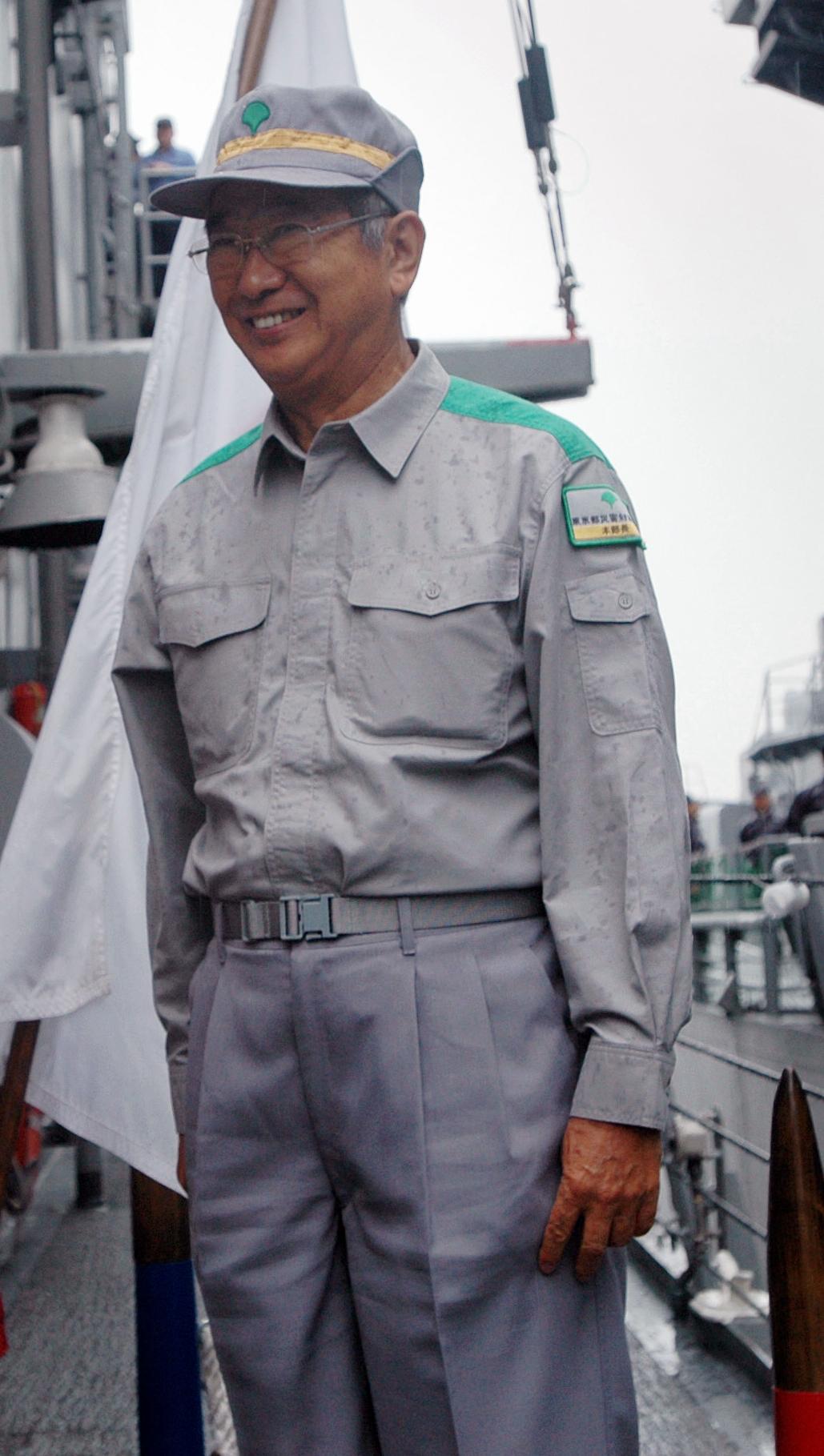
Shintaro Ishihara in 2006, U.S. Navy photo by Mass Communication Specialist Seaman Adam York, Wikimedia Commons

Third parties such as the JRP have been able to exploit the vacuum created by the unpopularity of both the leading parties, the Democratic Party of Japan (DPJ) led by Prime Minister Yoshihiko Noda and the Liberal Democratic Party (LDP) led by former Prime Minister Shinzo Abe. Despite being unsatisfied with the three year rule of the DPJ, the majority of the electorate do not wish to see a return of the LDP. The LDP ruled Japan almost continuously from the 1950s, except for a brief period in 1993-1994 when they lost power, until it was decisively defeated by the DPJ.

Opinion polls suggest that the the DJP and LDP unable to muster even half of the votes between them and more than one third of the voters are still undecided on whom to vote. Therefore, the third parties have a lot to gain from the elections. Many of the small parties are on the political right, seeking the revitalization of Japan. However, except this declared ambition, there is little consensus between them. This has created apprehension over the stability of the government which will be formed after the elections.

However, with the left wing parties largely marginalized, the lower House of the Diet which will be elected will pull Japan's politics to the right. The increased role of the nationalists such as Ishihara, who has a vehemently anti-China policy, will not be conducive towards diffusing regional tensions.

Sunday, November 11, 2012

Osama bin Laden still a Factor in U.S. Elections


Almost exactly eight years ago, America went to polls to elect a president. What was expected to be a tight race, ended in a relatively comfortable victory to the incumbent George W. Bush. America’s most wanted man and the leader of Al-Qaeda, Osama bin Laden, had an impact on the election through a video tape that was released days before. Apprehensive of their security, some voters swayed to the Bush camp, giving him an advantage in the eleventh hour.

Osama bin Mohammed bin Awad bin Laden, Wikimedia Commons

It is eighteen months since the demise of Osama bin Laden. His once feared Al-Qaeda has suffered defeat after defeat. However, the once feared bin Laden is still a man who still has an influence over American politics. If it was not the case, the National Geographic Channel would not have premiered “Seal Team Six: The Raid on Osama bin Laden” just two days before America chose a new president.

Directed by John Stockwell, the movie has been produced by Weinstein Company of Harvey Weinstein and Voltage Pictures. As one of the writers and executive producers of the movie, Weinstein plays a key part in the movie. As National Geographic Channel (NGC) President Howard Owens stated “[T]he success of this premiere would not have been possible without Harvey's driving force and support for this film and our network.” The fact that Weinstein was an ardent supporter and a key fundraiser of president Obama’s reelection campaign was a reason for the Republicans to complain. Adding salt to their injury, the film used several archive footages of Obama himself.

However, the NGC, which premiered the film, is primarily owned by one of the most conservative media tycoons, Rupert Murdoch. The concern for the Channel was to attract the maximum possible number of viewers, which the film achieved, despite millions of homes still not having electricity in the aftermath of Hurricane Sandy. With 2.7 million people watching the show, it was by far the best rated NGC show in 2012 and the sixth highest rated show in the entire 15 year history of the channel. David Lyle, CEO of the channel was very pleased. “We are overwhelmed that the viewers across the country responded en masse to this socially relevant, factually based and entertaining film.” It is clear that if the film was featured after the election, it would not have generated this magnitude of interest.

While some critics have praised the film, others have strongly criticized it. Writing to the New York Times, Alessandra Stanley argued that “[A]s a movie it’s not nearly as gripping as it could be, given how harrowing and suspenseful the actual events were on the night of May 2, 2011.”

However, the film has been made to impress the viewers, generating a sense of pride in the American public. It could not have come at a better moment when the Eastern United States is still dealing with the aftermath of Hurricane Sandy.

In the movie, the culmination of “Operation Neptune Spear”, the death of bin Laden, is followed by total silence, after which the time 1.20 a.m. is shown on the screen, which made me recall the popular TV series 24. Thereafter, the voice of the Commanding Officer of the operation is heard as he informs the White House and the Intelligence team involved in the operation that, “[F]or God and Country, Geronimo is KIA.” The film aptly ended with the other most famous phrase to come out of “Operation Neptune Spear.” President Barak Obama declares that “justice has been done.”

Following the operation, Obama also claimed that bin Laden raid is the “most important single day of my presidency.” Just before the election, opinion polls showed that the majority of the possible voters believed that Obama will be a better Supreme Commander than Romney. While economy was a key concern, security concerns may have also played a part in the reelection of Obama. Even in his death, Osama bin Laden has played his part in American politics through “Seal Team Six: The Raid on Osama bin Laden.”

Thursday, November 1, 2012

Why do we do Quizzing?


This article appeared in the souvenir of the 22nd "Blue and Gold Quiz" held by the General Knowledge Club of Royal College on October 30, 2012.


I was honoured when I was asked to contribute to the souvenir of the Blue and Gold Quiz in 2012. Since the Blue and Gold is all about quizzing, I decided to write on this topic when it was suggested. Why do people do quizzing? Why do we do quizzing?

Photo: Souvenir of "Blue and Gold Quiz 2012" by Ramesh Lakruwan.

Quizzing is a game which tests your knowledge in various areas. It’s simply a matter of answering questions thrown at you. Obviously, the more you answer, the more you will score. I have been asked many questions at various quizzes. Yet, when I was asked why I take part in quizzes, I was searching for an answer. With a fair bit of brainstorming, I came up with some answers. However, this may not be a complete list.

Anyone with a fair bit of intelligence can take part in quizzes. But, not all intelligent people are good quizzers and all quizzers are not having a born talent for it. Also, even though practically any sane person can participate in quizzes, it is hard to find a really good quizzer. The main reason is that to be a successful quizzer you have to have a passion for it.

What factors kindle the passion for quizzing? There can be several. Sir Francis Bacon stated one such factor, although not in the same context, in 1597, when he said “knowledge is power.” A knowledgeable person has self confidence and is ready to face the challenges of life. It may help them in their careers and even personal lives. On a personal note, the fact that I have some general knowledge has helped me in numerous competitive exams. General knowledge has become a part of our life.

Obviously, the competitiveness drives a quizzer to take up the challenge. It is also about social interaction. How good it is to interact with different people from different walks of life and yet have a common passion for quizzing? To compete with them and win will be an aspiration which drives on any serious quizzer. The excitement one feels after winning an open quiz or a school level quiz is matched only by a similar success. A success at an open quiz will have some financial benefits. But the recognition, fame and all other perks resulting from a victory will drive any quizzer towards that goal.

However, the most important factor which drives on many quizzers including me is the fun of it. Of course, it is hard work. But, interacting with colleagues, studying, inquiring, discussing, challenging each other, celebrating success, recalling the blunders we made over the years, contemplating the future strategy after a failure are all part of quizzing and part of the fun. Winning is fun. That excitement is worth all the hardship that goes to quizzing. But, even if he or she does not succeed, a passionate quizzer will never lament. At the end of the day, the knowledge we acquire and the fun we have are worth a fortune.

Friday, September 14, 2012

Five Countries win their First Ever Paralympic Medals in 2012 London Paralympics


The 2012 London Paralympics was the "greatest paralympic games ever" according to Philip Cravern, the president of International Paralympic Committee (IPC). About 4200 athletes from 164 National Paralympic Committees (NPC) including 14 newcomers took part in 502 events in 20 sports. Therefore, the 2012 Paralympics saw the highest number of athletes and NPCs taking part in history. Also the interest it generated was unprecedented.

The 2012 London Paralympics generated unprecedented interest for the Games in five countries for a reason of their own. Athletes from Chile, Ethiopia, Fiji, Sri Lanka and Uzbekistan won their first ever Paralympic medals, thereby making history in their countries. Interestingly, all the five athletes were men.

On September 3, Christian Valenzuela, a 29 year old, visibly impaired athlete from Chile, took part in the T11 1500m final and missed a medal by a whisker. But, four days later, he competed in T11 5000m final and comfortably won it with a time of 15:26:26, a personal best. T11 events are for athletes with serious visible impairments and they use a guide to compete. Valenzuela's guide was Christopher Guajardo. (watch the video here) This was a welcome medal for the South American nation which had failed to win a medal at the 2012 Summer Olympics.

If Chile can be proud of her athlete, the Fijians can be doubly proud. As the Fiji Times reported, Iliesa Delana, a 27 year old athlete from their small island state "jumped into history" when he won the F42 high jump event. In his event, he jumped 1.74m with one leg, recording a personal and regional best. This was the first ever medal for any Fijian in any Olympic Games, not only the Paralympics. Also, it was the first gold medal in Paralympics for any South Pacific nation. "I am deeply honoured and like many here today to speak on all our behalf in thanking Iliesa Delana in his outstanding performance in winning a gold medal in the 2012 Paralympic Games in London," President of Fiji, Ratu Epeli Nailatikau could state with no hesitation.

Ethiopia has always been a notable nation in middle and long distance races in athletics. However, they have been conspicuously absent or has been a low key participant in Paralympics. Although they started taking part in Paralympics in 1968, they have been absent more than they were present in the Games. Even when they arrived, they fielded one or two athletes only. In 2012, they fielded four athletes including a female athlete. Wondiye Fikre Indelbu, a 24 year old T46 middle distance runner from Ethiopia, won the silver medal in the men's T46 1500m race to give his country the first ever Paralympic medal. We can hope that Ethiopia will be a more active participant in the Paralympics in the future.

Sri Lanka's Pradeep Sanjaya, an Army soldier wounded in late 2008, won the bronze medal for the men's T46 400m event giving the island nation its first Paralympic medal. Sri Lanka has performed commendably in the Asian level but this was their first success at the Paralympic level. (If you have not read my post on Pradeep Sanjaya, you can do so from here)

Therefore, out of the participants who won the first Paralympic medals for their countries in 2012, four were in track and field events. The only other athlete to win the first ever medal for his country was 23 year old Uzbek judoka, Sharif Khalilov. He won the silver medal in men's 73 kg judo.

References

1. Owen Gibson, The Guardian, Paralympics closing ceremony review: an emotional and fiery finale, Sep. 10, 2012.

2. Gold for Chile, chileno.co.uk

3. London2012.com, Christian Valenzuela

4. London2012.com, Men's 5000m T-11

5. Daniel Boyle, Chile’s Cristián Valenzuela Takes Fourth in Paralympic 1500m Final, Sep 3, 2012.

6. Rashneel Kumar, Delana Jumps into History, Fiji Times, Sep. 04, 2012

7. Timoci Vula, President Congratulates Delana, Fiji Times, Sep. 13, 2012

8. London2012.com, Wondiye Fikre Indelbu

9. London2012.com, Sharif Khalilov.

Wednesday, September 5, 2012

Sri Lanka wins First Ever Paralympic Medal


Pradeep Sanjaya, from Sri Lanka Army, has entered the country's sports history in flying colours as the first ever Paralympic medal winner for the country. He took part in the T46 400m race. The final was held on September 4, 2012. (early morning of September 5th, Sri Lanka time). The event was won by Gunther Matzinger of Austria with a time of 48.45 seconds. The Brazilian athlete, Yohansson Nascimento came second with a time of 49.21 seconds and Pradeep Sanjaya won recorded a time of 49.28 seconds to come third. This was an improvement from the time of 49.82 seconds he recorded at the heats earlier in the day. In this heat, he came second behind the Rwandan athlete Hermas Muvunyi, who came fifth in the final. These times were far better than his 50.56 seconds time recorded in the selection trials for the Paralympics 2012 held in Kuala Lampur.

Pradeep Sanjaya was born in April 1986. He is a Lance Corpral of Sri Lanka Army. He is paralyzed in his left arm after he fell victim to a LTTE motar blast in Kilinochchi. This was the very last days of the battle for the Northern city which served as the administrative capital of the Liberation Tigers of Tamil Eelam (LTTE). After recovery, he started taking part in Para Games in the Army and also internationally. He has consistently performed well in both 400m and 200m events. In December 2010, he won the T46 400m event in Asian Para Games in Guangzhou, China with a time of 51.83 seconds. This shows that he has steadily improved on his timing at this event from 2010 onwards as his times in 2012 are significantly better.

In the selection trials in Kuala Lampur, Pradeep also won the 200m event establishing an Asian record with a time of 22.98 seconds. However, in the same event at London 2012 Paralympics, he could only come seventh in Heat 3 of the first round with a much worse time of 23.40 seconds.

References

1. Sri Lanka Army website, Army’s Pradeep Sanjaya Joins History Winning First Ever Bronze in London Paralympic Games - 2012 Sep. 5, 2012.

2. Newsfirst.lk, My dream came true, says Pradeep Sanjaya, Sep. 5, 2012.

3. Times Online, Paralympics: 400m runner Sanjaya gives Sri Lanka’s maiden medal Sep 5, 2012.

4. london2012.com, Men's 400m - T46

5. london2012.com, Pradeep Sanjaya Uggl Dena Pathirannehelag

6. london2012.com, Men's 200m - T46 (Round 1)

7. Ada Derana, Pradeep gives Sri Lanka first gold in Asian Para Games Dec. 17, 2010.